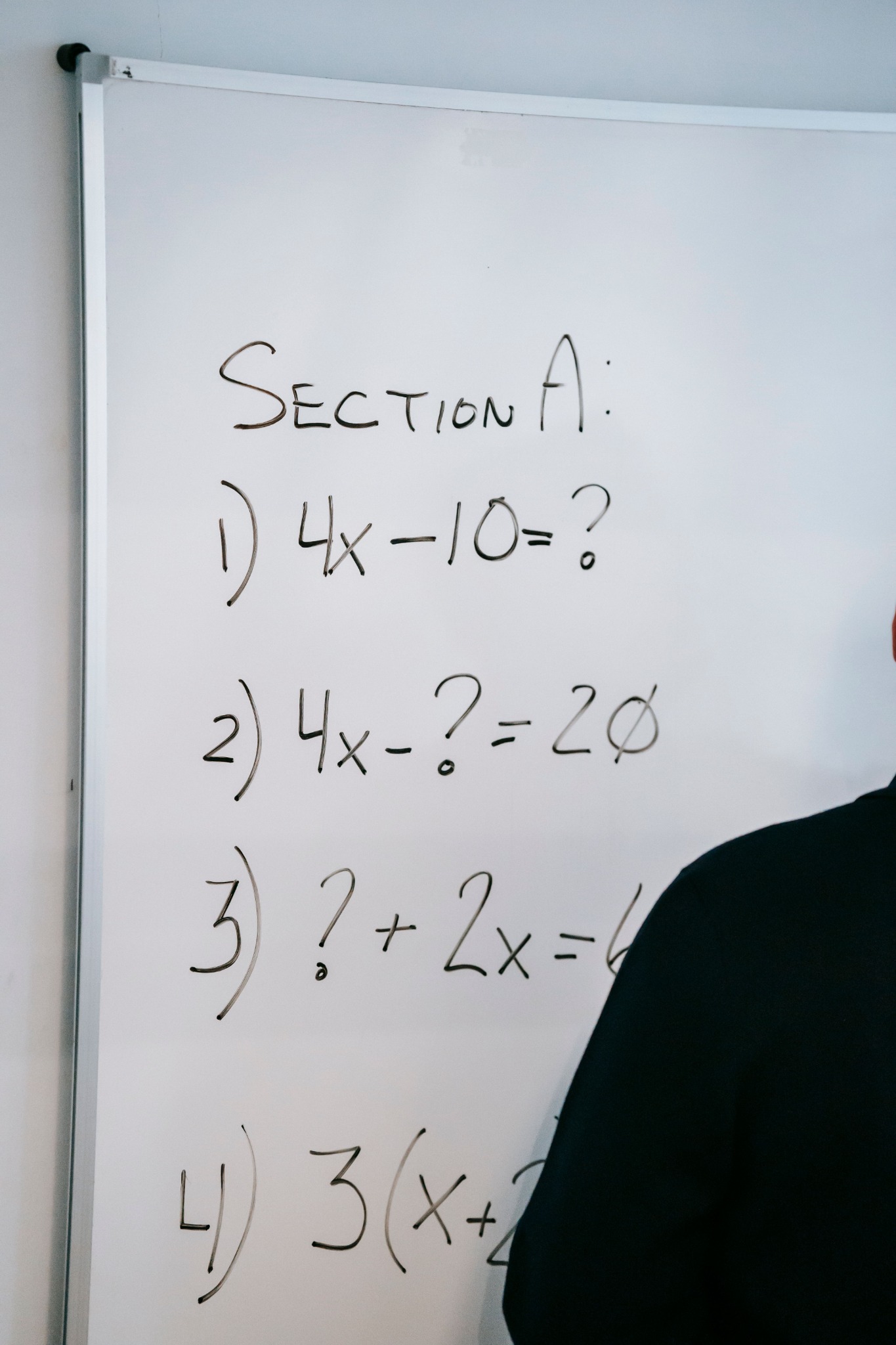
Students rarely struggle with math for only one reason. Sometimes the current lesson is difficult. Sometimes an older skill is missing. Sometimes the student understands the material but cannot apply it independently under test conditions. This guide explains how to think about the problem and what useful support should look like.
Grade 10 starts to expose weak algebra
By Grade 10, students are expected to work more comfortably with algebraic expressions, equations, graphs, and geometric relationships. A student who can follow a classroom example may still struggle when the numbers or wording change.
That is usually a sign that the method has been memorized without the underlying idea becoming secure. Tutoring should test whether the student can explain why a step works and apply it in a new context.
Graphing should connect to equations
Students often learn graphing as a set of separate procedures. The more useful goal is to connect the equation, the shape of the graph, important points, and what changes when a parameter changes.
Those connections matter later in functions and calculus. Spending time on them in Grade 10 can make senior math much less intimidating.
Geometry needs both formulas and reasoning
Knowing a formula is only the first step. Students also need to identify which measurements matter, choose the right relationship, and communicate their reasoning clearly.
Tutoring can help by mixing direct questions with less obvious problems that require the student to decide what information is relevant.
Tests should be reviewed for patterns, not just marks
A returned test contains useful information. Did the student lose marks from algebra errors, misunderstood wording, weak diagrams, rushing, or not knowing where to start?
Looking for patterns across several assessments helps turn a disappointing mark into a specific plan. The same mistake should not keep appearing for months.
Grade 10 is a good time to prepare for senior math
Students who expect to take functions, Advanced Functions, Calculus and Vectors, or math-heavy post-secondary programs benefit from entering Grade 11 with strong algebra and graphing skills.
That does not mean racing ahead. It means making the current material dependable enough that the student does not have to relearn it while also handling harder topics next year.
Frequently asked questions
What topics can Grade 10 tutoring cover?
Support can include algebra, graphing, analytic geometry, trigonometry, measurement, problem solving, homework, and test preparation depending on the student’s course.
Can tutoring help a student prepare for Grade 11 Functions?
Yes. Strong algebra, graph interpretation, and equation-solving skills are especially useful preparation.
How much practice should a student do between sessions?
Short, consistent practice is usually more useful than one long session. The exact amount depends on the student and the course workload.
Need help with math?
Get in touch with the student’s grade, current course, and the topics causing difficulty. We can discuss the right next step.
Get in Touch