
Students rarely struggle with math for only one reason. Sometimes the current lesson is difficult. Sometimes an older skill is missing. Sometimes the student understands the material but cannot apply it independently under test conditions. This guide explains how to think about the problem and what useful support should look like.
Know what kind of help your child actually needs
Math tutoring can mean very different things. One student may need help keeping up with current homework. Another may have missed several foundational ideas and needs a slower rebuild. A third may be doing well but preparing for Advanced Functions or Calculus and wants stronger problem-solving skills.
Before choosing support, try to identify the main problem: understanding, confidence, organization, test performance, or missing foundations. The answer changes how tutoring should be structured.
Do not wait for a major drop in marks
Students often show signs before a report card changes. Homework starts taking much longer. They avoid certain questions. They rely heavily on examples from class. They understand a concept when it is explained but cannot reproduce it the next day.
Those patterns can be easier to fix early. A few targeted sessions may be enough to repair a specific weakness before it affects the next unit.
Use tutoring to connect old and new skills
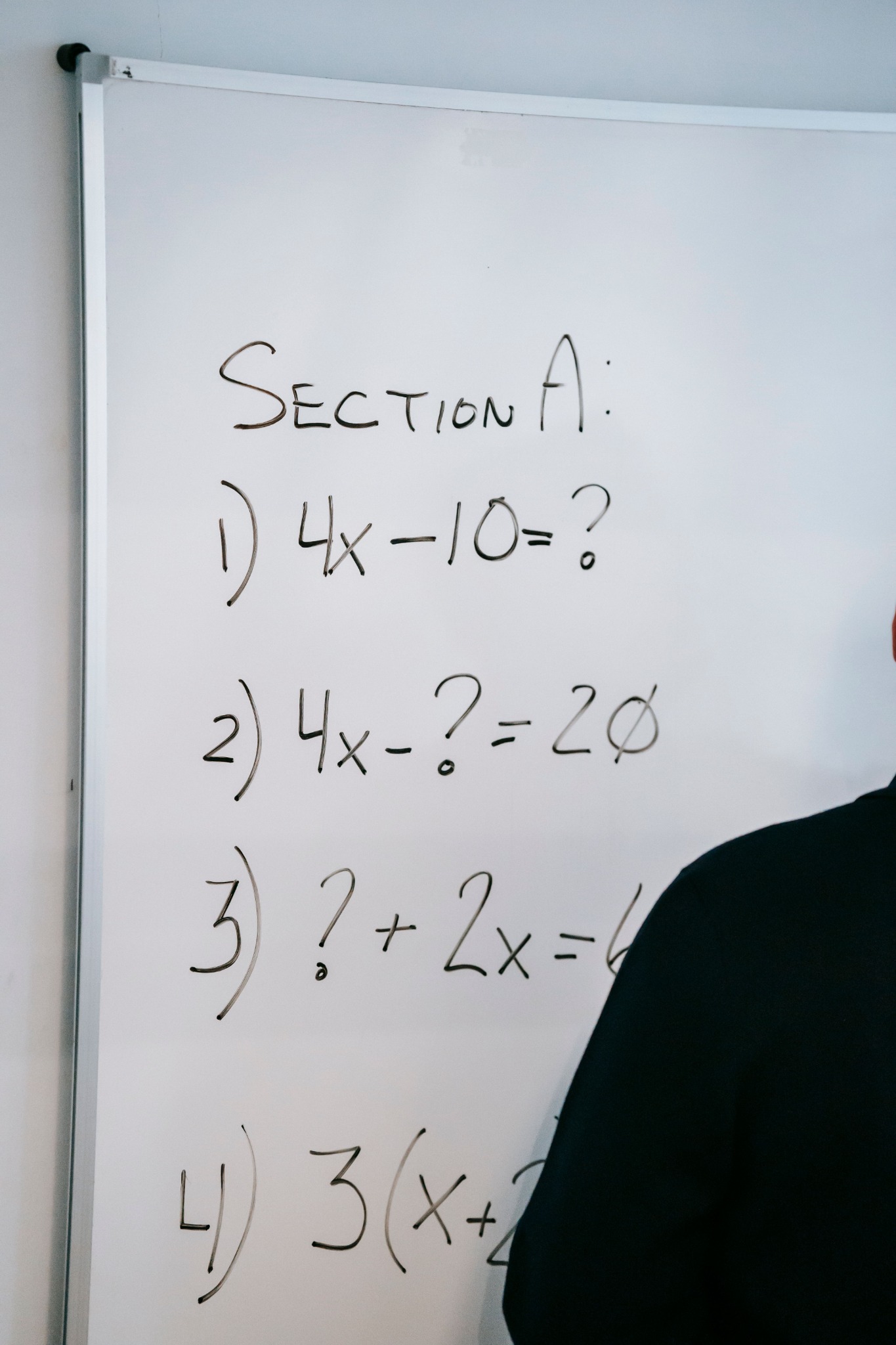
Math is cumulative. New topics are usually built from older ones. If a student cannot manipulate fractions comfortably, algebra becomes harder. If factoring is weak, functions become harder. If functions are weak, calculus becomes harder.
Strong tutoring identifies those links. The student still works on the current course, but earlier gaps are repaired when they become the reason the current topic is difficult.
Build better test preparation habits
Many students study math by rereading notes or reviewing solved examples. That can create a false sense of familiarity. Effective test preparation requires solving fresh problems without looking at the method first.
A tutor can help the student organize practice by topic, mix easy and difficult questions, revisit previous mistakes, and practise under a time limit when appropriate. Those habits become increasingly important in senior high school.
Use AI as practice support, not a shortcut
AI can be useful when it creates another example, changes the numbers in a question, or explains a concept in a different way. It becomes less useful when a student simply asks for the final answer and copies the steps.
Maxbora uses AI as a practice and feedback tool around human instruction. The student still needs to explain the reasoning and solve problems independently so that the learning is real.
Frequently asked questions
What grades do you support in Kitchener?
The focus is Grades 6–12, from middle-school foundations through senior functions, Advanced Functions, Calculus and Vectors, and Data Management.
Can tutoring focus on an upcoming test?
Yes. Short-term test preparation can be useful, especially when it also identifies the underlying skills that caused the difficulty.
Can a student get help even if they are doing well?
Yes. Tutoring can also be used for enrichment, stronger problem solving, or preparation for a more demanding course.
Need help with math?
Get in touch with the student’s grade, current course, and the topics causing difficulty. We can discuss the right next step.
Get in Touch